Product info
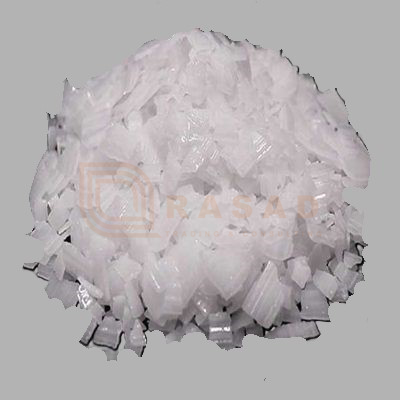
  • Name: caustic soda flakes
  • Chemical formula: NaOH
  • Physical characteristics: flakes
  • Category: chemicals‍
Features
ATRIBUTES
USES
DELIVERY TERMS
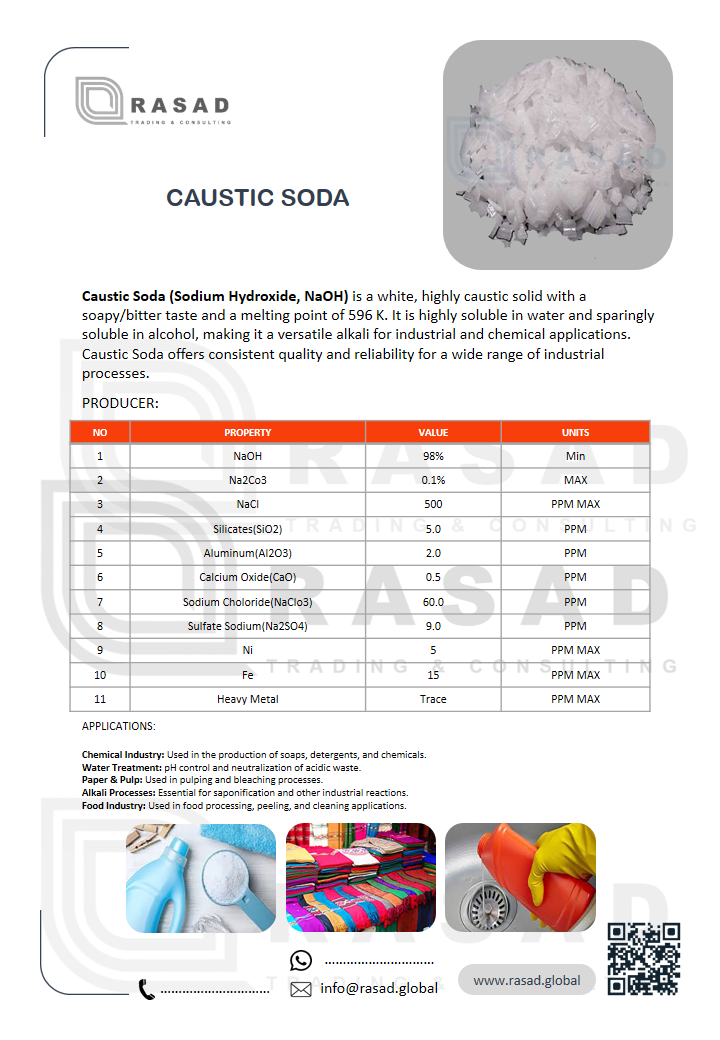
  • It is a white solid ionic compound with a melting point of 596 K.
  • Naoh bitter and soapy
  • It is highly soluble in water and sparingly soluble in alcohol.
  • is a highly caustic base and alkali

Sodium hydroxide is used to manufacture soaps and a variety of detergents used in homes and commercial applications.it is used to help manufacture a variety of medicines and pharmaceutical products, from common pain relievers like aspirin, to anticoagulants that can help to prevent blood clots, to cholesterol-reducing medications.Municipal water treatment facilities use sodium hydroxide to control water acidity and to help remove heavy metals from water.Sodium hydroxide is used in several food processing applications, such as curing foods like olives or helping to brown Bavarian-style pretzels, giving them their characteristic crunch.

  1. oil, gas, petrochemical industries
  2. chemical industries
  3. pharmaceutical industrie
  4. food production
  5. pulp and paper production
  6. leather and synthetic silk production
  7. alcohol production
  8. battery production
  9. tile and ceramic production

price

Global oil prices are variable, meaning there is no stable and specific price for Technical grade granule urea Please contact us to inquire about the daily prices. You can also find price changes of this material in the chart provided in this section.

Price Inquiry
Gallery

Contact us

Your Message Has Been Sent

You can expect a response within 24 hours. Stay tuned for some news!

Please fill in all required fields.

Discover More

View All
View All

PVC S60

PVC S60 (Grade S6058) is a suspension polyvinyl chloride (SPVC) homopolymer known for its versatility in the production of rigid PVC products. With a K Value of 58.3-61.1, it offers a balanced combination of performance and ease of processing, making it ideal for applications requiring precise, high-quality output.

Key characteristics of PVC S60 include low porosity and high bulk density (0.55-0.61 g/cm³), enabling efficient machine throughput and optimized processing. These features make it particularly suitable for the construction industry, where durability, cost-effectiveness, and ease of assembly are essential.

This grade also stands out for its minimal gel content and excellent early color heat stability, ensuring consistent quality and appearance in finished products. Furthermore, its outstanding lot-to-lot uniformity enhances reliability in large-scale industrial processes.

With a viscosity range of 0.739-0.79 cm³/g, PVC S60 is designed to perform exceptionally well in rigid formulations, providing strength, efficiency, and aesthetic quality across a range of applications. Supplied in powder form, it adheres to HS Code 39041090 and is produced by Arvand, Bandar Imam, and Abadan Petrochemical Companies.

PVC S60 (Grade S6058) is highly suited for applications requiring robust and durable materials, particularly in high-production capacity environments. Its properties make it ideal for rigid calendering, where it is used to produce thin sheets or films with uniform thickness and a smooth finish.

Additionally, PVC S60 excels in rigid foam production, offering the structural rigidity and lightweight properties needed for high-performance foam products. The material is also commonly utilized in the manufacturing of profiles and rigid bottles, especially in construction and packaging, where strength, durability, and precise shaping are essential. Moreover, PVC S60 is effective in the extrusion of flexible sections and hoses, providing versatility across various industrial applications.

PVC S60

Prilled Urea 46%

Granular Urea, also known as coated granular urea or agricultural granular urea, is a high-quality nitrogen fertilizer, renowned for its superior characteristics compared to prilled urea. With a nitrogen content of 46%, it stands out as the most concentrated form of solid nitrogen fertilizer available. This product is designed for optimal performance in various agricultural and horticultural applications.Granular Urea consists of larger particles with an uneven shape, which contributes to its robust physical properties. Unlike prilled urea, it is less prone to breaking and maintains its integrity during handling and application. The product is available in particle sizes ranging from 2 to 4 mm, making it suitable for use with conventional spreading equipment.The main advantage of granular urea is its high nitrogen concentration, which promotes vigorous plant growth. It can be applied directly to the soil or blended with other fertilizers such as phosphate and potash to create a comprehensive NPK (nitrogen, phosphate, and potash) mix. This versatility allows it to meet various plant nutritional needs effectively.Produced by Khorasan and Shiraz Petrochemical Companies, this agricultural granular urea is ideal for early-season grass fertilization and cereal top-dressing later in the season. It ensures precise spreading up to 24 meters, making it a reliable choice for both hand spreading and mechanical spreaders.

  • Raw material for fertilizer production

Granular urea is a key ingredient in the production of various other fertilizers. Its high nitrogen content makes it an essential component for creating blended or specialized fertilizers, enhancing nutrient delivery for diverse agricultural needs.

  • Manufacturing of melamine

Used in the production of melamine through a reaction with formaldehyde. Melamine is a crucial component in melamine-methanal resins, which are used for durable coatings, laminates, and kitchenware, benefiting from urea’s chemical properties.

  • Formation of urea-formaldehyde resin

Granular urea is used in synthesizing urea-formaldehyde resin. This resin is vital in manufacturing adhesives, particleboard, and other wood products, providing strong bonding and durability in industrial applications.

  • Reducing air pollution

Coated granular urea is employed in the reduction of nitrogen oxides (NOx) emissions from diesel engines. It is used in Selective Catalytic Reduction (SCR) systems, where it reacts with NOx to produce nitrogen and water, thus mitigating air pollution from vehicles.

  • Agricultural fertilizer

It is applied to grass early in the growing season to promote healthy, early-season growth or used for top-dressing cereals later in the season. The high nitrogen content supports robust plant growth and improves crop yield, making it a versatile agricultural tool.

Prilled Urea 46%