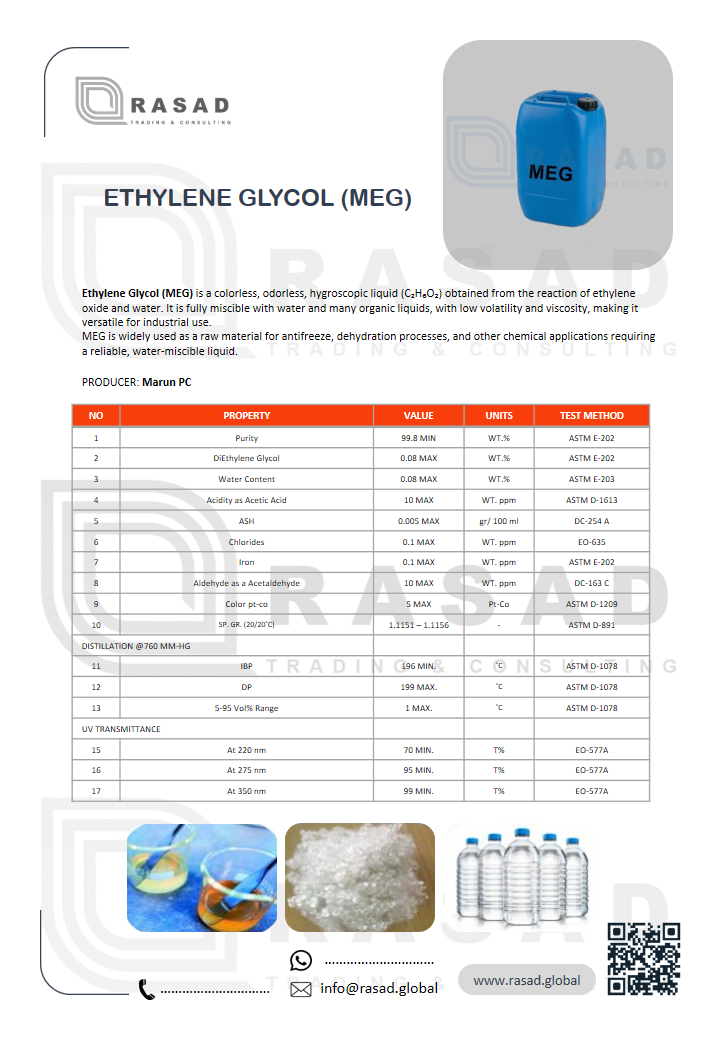
This feature means that MEG can stay in the liquid state across a wide range of temperatures at standard atmosphere pressure. It is due to its high boiling point of 197.3°C (387.1°F) and low freezing point of -12.9°C (8.8°F). It is versatile and can be used across different environmental conditions and industries.
This feature is related to the ability of MEG to resist evaporation under a normal atmosphere. It reduces the risk of creating flammable or explosive vapors, making MEG safer to handle and store. In addition, it means less product waste during storage, transportation, and use, leading to better efficiency and cost-effectiveness.
That means MEG can flow easily, especially at typical operating temperatures. So it can mix with other substances effortlessly, leading to better mass transfer and reaction rates.
MEG can easily blend with water and many organic solvents to form a homogeneous solution. It can mix with these compounds at various concentrations without separating into distinct layers. MEG’s high miscibility allows it to be used in a wide range of applications where mixing with other substances is crucial.
MEG has a strong desire for water molecules and can absorb moisture from its surroundings. It can come into contact with various environments or substances to remove water effectively. This property is crucial in many industrial processes where water removal or control is necessary.
There is a strong global need for Monoethylene Glycol as it is a vital ingredient. Due to the reactivity of the hydroxyl group and its high degree of solubility, ethylene glycol offers a wide range of applications. The ability to mix readily and form stable solutions enhances MEG’s versatility, efficiency, and effectiveness in numerous processes.
MEG is a key component in synthesizing polyester fibers, films, and resins. It is used to produce polyethylene terephthalate (PET) for plastic bottles and packaging. Polyester fibers, threads, films, and polyester resins are produced from the reaction between MEG with dibasic acids and their esters and it is used in the synthesis of PET.
It is used in synthesizing unsaturated polyester resins, alkyd resins, rosin esters, and polyurethane resins. It acts as a coalescence and anti-freezing agent in emulsified resins. It is used together with adipic acid and other glycols, and rubber with a high chemical and abrasion resistance. Resins produced from oleic acid and MEG, known as alkyd resins, are used frequently in the industry of paints and varnishes. It also can be used as a wetting and plasticizing agent in the production of cellophane, glues and adhesives, textiles, printing ink, leather, cosmetics, paper, and pharmaceutical products.
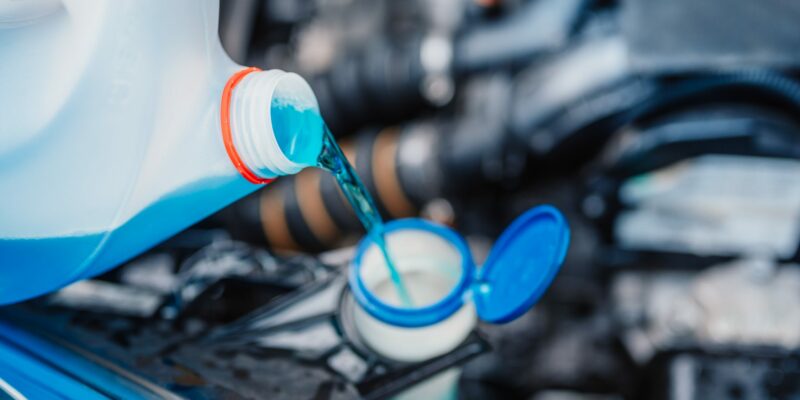
Because of its low freezing point, it can decrease the freezing point of water in automotive antifreeze. So, it is used in aircraft de-icing and anti-icing agents. Plus, it is used in industrial refrigeration circuits and internal combustion engine coolant systems to raise the boiling point and reduce the freezing point of the solution used. It can also be utilized in the formulation of printing ink, in the treatment of gases, in the formulation of fire-resistant hydraulic fluids, cutting oils, surface polishers, agrochemicals, extraction of solvents, manufacture of pigmented pastes and putty for walls, and in the synthesis of explosives.
MEG is a component in polyester fiber synthesis for sports and casual wear. It is used as a wetting and plasticizing agent in textile production. Polyester fibers have high strength, durability, and resistance to shrinking and wrinkling.
MEG is a key ingredient in polyethylene terephthalate (PET) production for making bottles, containers, films, and trays. PET has excellent transparency, mechanical strength, and recyclability.
It serves as a raw material, solvent, plasticizer, humectant, and intermediate in various chemical syntheses. MEG is also used to produce unsaturated polyester resins, polyurethane systems, detergents, morpholine, and other organic compounds.
MEG acts as a dehydration agent in natural gas pipelines. It can inhibit the formation of natural gas clathrates.
It is used as a lubricant for moving parts in cooling systems and as an additive for electrolytic polishing belts, besides antifreeze.
It can be applied as a de-icing and anti-icing agent for aircraft. It leads to preventing ice formation on the wings, fuselage, and other parts of the aircraft.
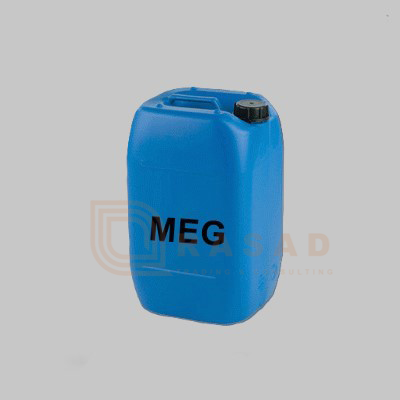
Monoethylene Glycol (MEG) can be delivered in various packaging options, including drums, Intermediate Bulk Containers (IBC), and tanks, depending on the required quantity. Petrobon supplies MEG to different cities across several countries, making the logistics process and costs vary based on location. For detailed information on transportation options and tailored solutions for your needs, contact Petrobon’s professional team. They can provide guidance based on your location and specific requirements to ensure smooth and cost-effective delivery.
Global oil prices are variable, meaning there is no stable and specific price for Technical grade granule urea Please contact us to inquire about the daily prices. You can also find price changes of this material in the chart provided in this section.
Price Inquiry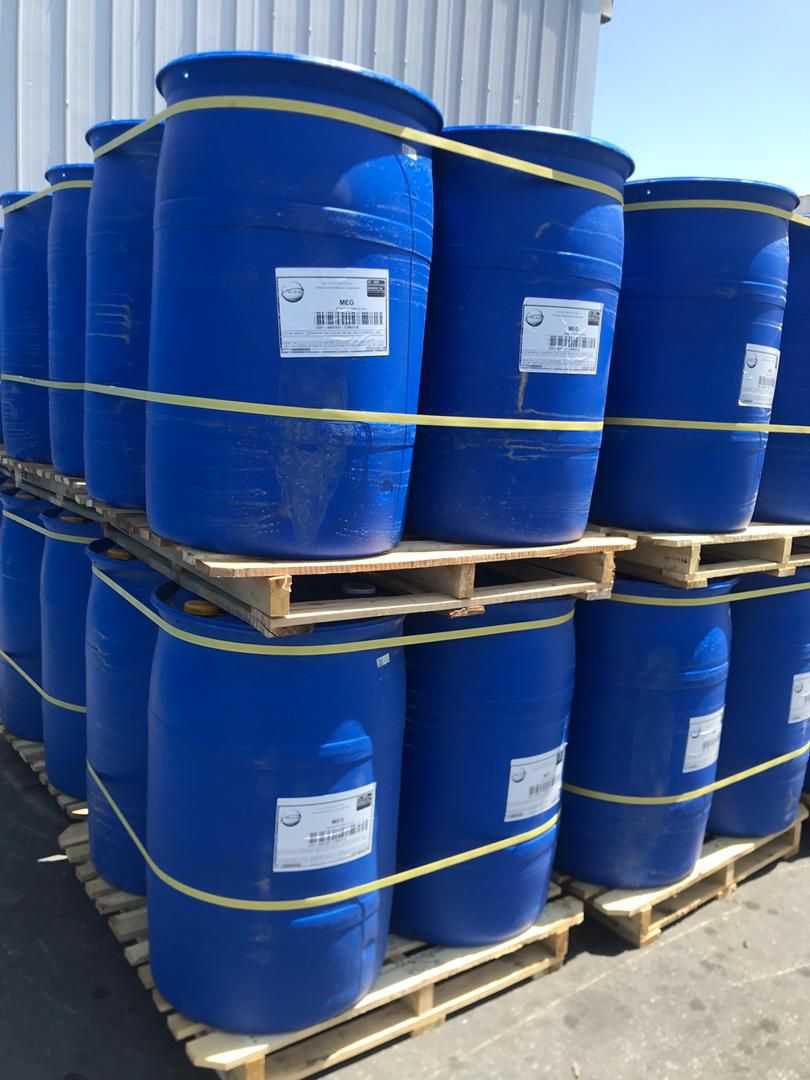

growing plants and vegetables: